Kota Kinabalu, Sabah – Jesselton University College (JUC) strengthened its collaboration with non-governmental organisations (NGOs), international research organisations and community partners through student volunteering, research initiatives and educational resource development. These collaborations involved the Chartered Association of Continuing Education (CACE), World Research Union (WRU), Sabah Cheshire Home and Services, Sabah Skills Development Sdn. Bhd. (SSD), and environmental conservation partners. Together, these initiatives reflect JUC’s commitment to advancing the United Nations Sustainable Development Goals (SDGs) through inclusive education, research, community engagement and environmental sustainability.
In February 2025, JUC collaborated with Sabah Cheshire Home and Services, supported by the Sabah Ministry of Community Development and People’s Well-being, to conduct the four-day Effective Communication in Hospitality training programme for persons with disabilities (PWDs). Held from 10–13 February 2025, the programme focused on strengthening communication skills, self-confidence, interpersonal relationships and employment readiness among participants. The collaboration demonstrated how universities and NGOs can work together to deliver inclusive educational opportunities and address barriers affecting disadvantaged communities.
The training programme incorporated practical learning activities covering hospitality communication, emotional intelligence, customer service, complaint handling and workplace interactions. Through the involvement of trainers and representatives from collaborating organisations, participants gained exposure to skills relevant to the hospitality and service industries. The initiative contributed to SDG 4 (Quality Education), SDG 8 (Decent Work and Economic Growth) and SDG 10 (Reduced Inequalities) by promoting accessible skills development and improving opportunities for persons with disabilities to participate in employment and community life.
In 2025, JUC also collaborated with CACE, a Canada-headquartered not-for-profit organisation with a regional office in Hong Kong, and SSD, a government-linked company under the Ministry of Education, Science, Technology and Innovation, Sabah, to develop educational resources concerning Recognition of Prior Learning (RPL), educational accessibility and professional competency recognition. The collaboration brought together higher education, professional certification and vocational training perspectives to strengthen alternative qualification pathways for working adults and experienced professionals.
JUC contributed institutional knowledge concerning Malaysia’s Accreditation of Prior Experiential Learning (APEL) framework and alternative university admission pathways, while CACE provided international perspectives on professional certification and competency recognition. SSD, represented by its Chief Executive Officer, Ts. Hazrullizam Idris, contributed expertise in vocational training and workforce development. The collaboration focused on improving access to recognised qualifications, reducing educational barriers and expanding lifelong learning opportunities, supporting SDGs 4, 8, 10 and 17.
JUC further demonstrated its commitment to student volunteering through participation in the Reeeforest Programme at Mengalum Island on 16 October 2025, organised by Sin Chiun Holding Sdn. Bhd., a subsidiary of Taiwan-based Sinyi Realty Inc. The environmental conservation programme was guided by Mr. Michael Yap, Environmental Sustainability Manager and a member of The Sabah Society, a non-governmental organisation promoting environmental and heritage awareness. JUC students participated in the initiative, which aimed to promote sustainable ecotourism and forest habitat restoration.
During the Reeeforest Programme, JUC students participated in environmental activities involving tree planting, nursery and seedling management, wildlife observation, compost production and a turtle hatchery visit. These activities provided practical exposure to ecological restoration, biodiversity conservation and sustainable environmental management. The programme supported SDG 13 (Climate Action), SDG 14 (Life Below Water) and SDG 15 (Life on Land) by encouraging student participation in environmental conservation and community sustainability initiatives.
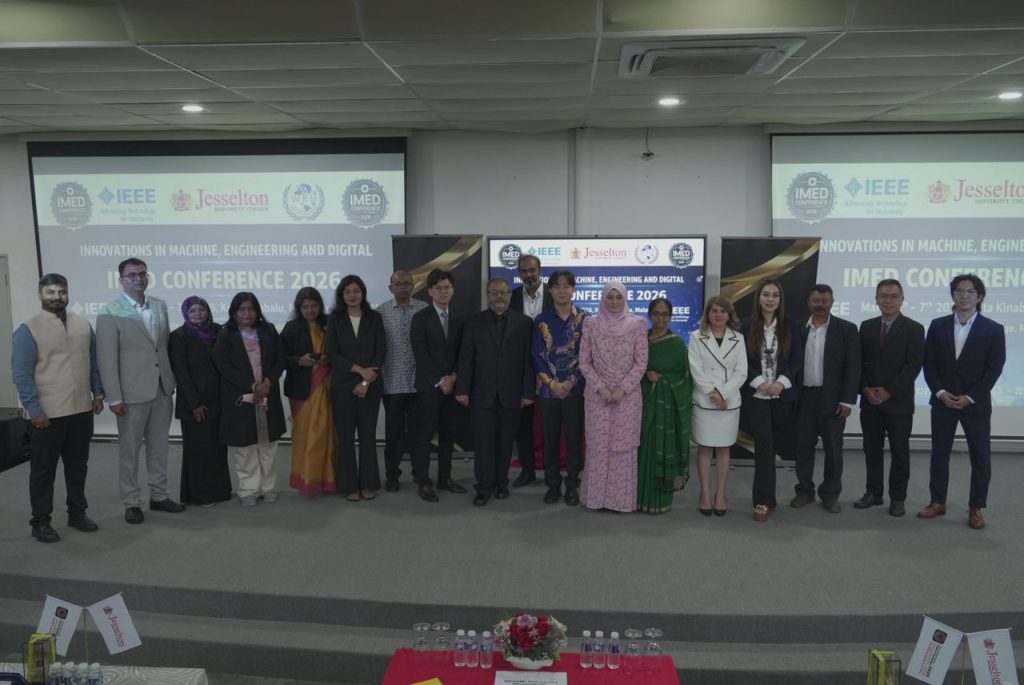
In addition to educational and environmental programmes, JUC collaborated with World Research Union (WRU), an international research NGO, to advance research activities through the Innovations in Machine, Engineering and Digital Conference 2026 (IMED-2026). Co-organised by JUC and WRU on 6–7 March 2026, the conference brought together researchers, academics and industry experts from Asia, Europe and the Middle East to exchange research findings and strengthen international academic collaboration in engineering, artificial intelligence and digital technologies.
IMED-2026 received over 400 international research submissions, with 117 papers accepted following peer review. Selected papers were designated for publication in the IEEE Xplore Digital Library, which is indexed by Scopus. The research presented may contribute to SDG 4 (Quality Education), SDG 8 (Decent Work and Economic Growth), SDG 9 (Industry, Innovation and Infrastructure) and SDG 17 (Partnerships for the Goals) through technological innovation, knowledge exchange and the exploration of research-informed solutions to sustainable development challenges.
Through these collaborations, Jesselton University College demonstrated its commitment to working with NGOs and external organisations across three areas: student volunteering programmes, research initiatives and educational resource development. By connecting disability inclusion, environmental conservation, professional education and international research, JUC continues to strengthen partnerships that promote sustainable development, inclusive learning and community well-being.