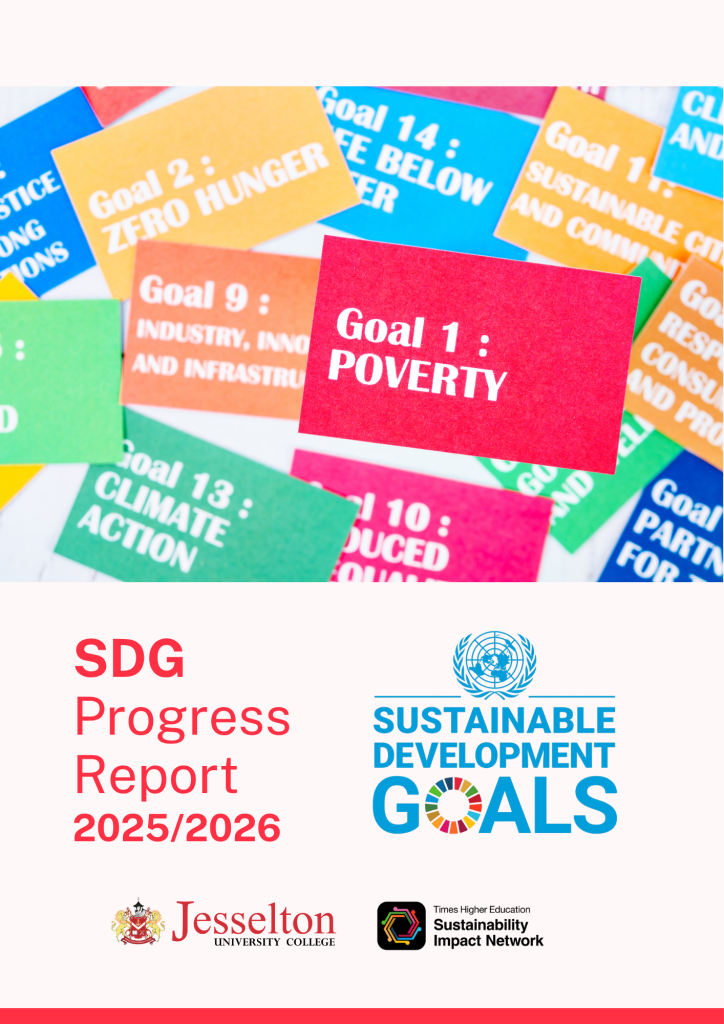
KOTA KINABALU, SABAH – Jesselton University College (JUC) has officially published its Sustainable Development Goals (SDG) Progress Report 2025/2026, highlighting the institution’s commitment and contributions towards achieving all 17 United Nations Sustainable Development Goals (SDGs). The report provides a comprehensive overview of JUC’s sustainability initiatives, institutional policies, academic activities, community engagement and strategic partnerships throughout the reporting period.
The report documents JUC’s progress across key sustainability areas, including poverty reduction (SDG 1), zero hunger (SDG 2), health and well-being (SDG 3), quality education (SDG 4), gender equality (SDG 5), clean water and sanitation (SDG 6), affordable and clean energy (SDG 7), decent work and economic growth (SDG 8), industry and innovation (SDG 9), reduced inequalities (SDG 10), sustainable cities and communities (SDG 11), responsible consumption and production (SDG 12), climate action (SDG 13), life below water (SDG 14), life on land (SDG 15), peace, justice and strong institutions (SDG 16), and partnerships for the goals (SDG 17). Through these initiatives, JUC continues to integrate sustainability principles into its educational programmes, campus operations and community development activities.
The report outlines JUC’s contributions across all 17 SDGs, highlighting the following initiatives and areas of progress:
- SDG 1 – No Poverty: Providing scholarships, financial assistance and student support programmes for disadvantaged learners, including students from B40 households. JUC also introduced its Inclusive Education for All (IEFA) initiative to expand educational accessibility.
- SDG 2 – Zero Hunger: Promoting food accessibility and community welfare through the Sajian Kasih Ramadan food-sharing programme and supporting sustainable agriculture through the proposed Diploma in Smart Farming.
- SDG 3 – Good Health and Well-Being: Strengthening student health awareness and psychological well-being through HIV/AIDS awareness programmes, creative art therapy sessions and psychology-related educational activities.
- SDG 4 – Quality Education: Expanding lifelong learning opportunities through National Training Week, free community training and inclusive educational outreach. JUC also reported eight Scopus-indexed publications related to quality education in 2025.
- SDG 5 – Gender Equality: Promoting equal educational opportunities, women’s participation and leadership development through institutional policies and mentoring programmes. In 2025, JUC recorded 262 female participations across its mentoring initiatives.
- SDG 6 – Clean Water and Sanitation: Promoting access to drinking water, campus hygiene, sanitation awareness and responsible water consumption to support a healthier learning environment.
- SDG 7 – Affordable and Clean Energy: Encouraging responsible electricity consumption and energy conservation practices, including awareness of energy-efficient lighting and sustainable campus resource management.
- SDG 8 – Decent Work and Economic Growth: Supporting employability, entrepreneurship and workforce development through professional training, industry engagement and inclusive hospitality skills programmes for persons with disabilities.
- SDG 9 – Industry, Innovation and Infrastructure: Strengthening digital transformation through AI and ChatGPT training, academic research, scholarly publications and international research collaboration initiatives.
- SDG 10 – Reduced Inequalities: Expanding educational opportunities for disadvantaged communities through inclusive admissions policies, financial assistance and targeted skills development for persons with disabilities.
- SDG 11 – Sustainable Cities and Communities: Encouraging environmental responsibility and sustainable community development through student participation in conservation activities, including the Reeeforest Programme at Mengalum Island.
- SDG 12 – Responsible Consumption and Production: Promoting responsible waste management, recycling awareness, paperless documentation and digital learning practices to encourage sustainable resource consumption.
- SDG 13 – Climate Action: Strengthening environmental awareness through tree planting, ecological restoration and sustainability education activities involving JUC students.
- SDG 14 – Life Below Water: Highlighting marine conservation awareness and coastal protection through environmental volunteering, recycling activities and previous beach-cleaning initiatives.
- SDG 15 – Life on Land: Supporting biodiversity conservation and terrestrial ecosystem restoration through tree planting, seedling preparation and environmental education at Mengalum Island.
- SDG 16 – Peace, Justice and Strong Institutions: Strengthening institutional governance, equal opportunities and non-discrimination through inclusive admissions policies and partnerships supporting vulnerable communities.
- SDG 17 – Partnerships for the Goals: Expanding collaboration with government agencies, NGOs, industry partners and international academic organisations, including research engagement through the International Conference on Management, Education and Development (IMED 2026).
Among the key initiatives highlighted are inclusive education and financial assistance programmes, professional training for persons with disabilities, AI and digital skills development, environmental conservation activities, student mentoring programmes and collaborations with government agencies, industries and non-governmental organisations. These activities demonstrate JUC’s efforts to translate sustainability commitments into practical initiatives that benefit students, local communities and industry stakeholders.
The publication also strengthens JUC’s commitment to transparency, institutional accountability and evidence-based sustainability reporting. By consolidating its achievements and supporting documentation across all 17 SDGs, the report serves as an important reference for international higher education assessment frameworks, including the Times Higher Education (THE) Impact Rankings and THE Sustainability Impact Ratings, while providing stakeholders with greater visibility into the institution’s sustainability performance.
Moving forward, Jesselton University College will continue strengthening its sustainability initiatives through education, research, community engagement and strategic partnerships. The SDG Progress Report 2025/2026 reflects JUC’s ongoing commitment to the United Nations 2030 Agenda for Sustainable Development and its ambition to create meaningful, measurable and lasting impacts on society.
Read the Full JUC SDG Progress Report 2025/2026: https://tinyurl.com/2jm9t5z6