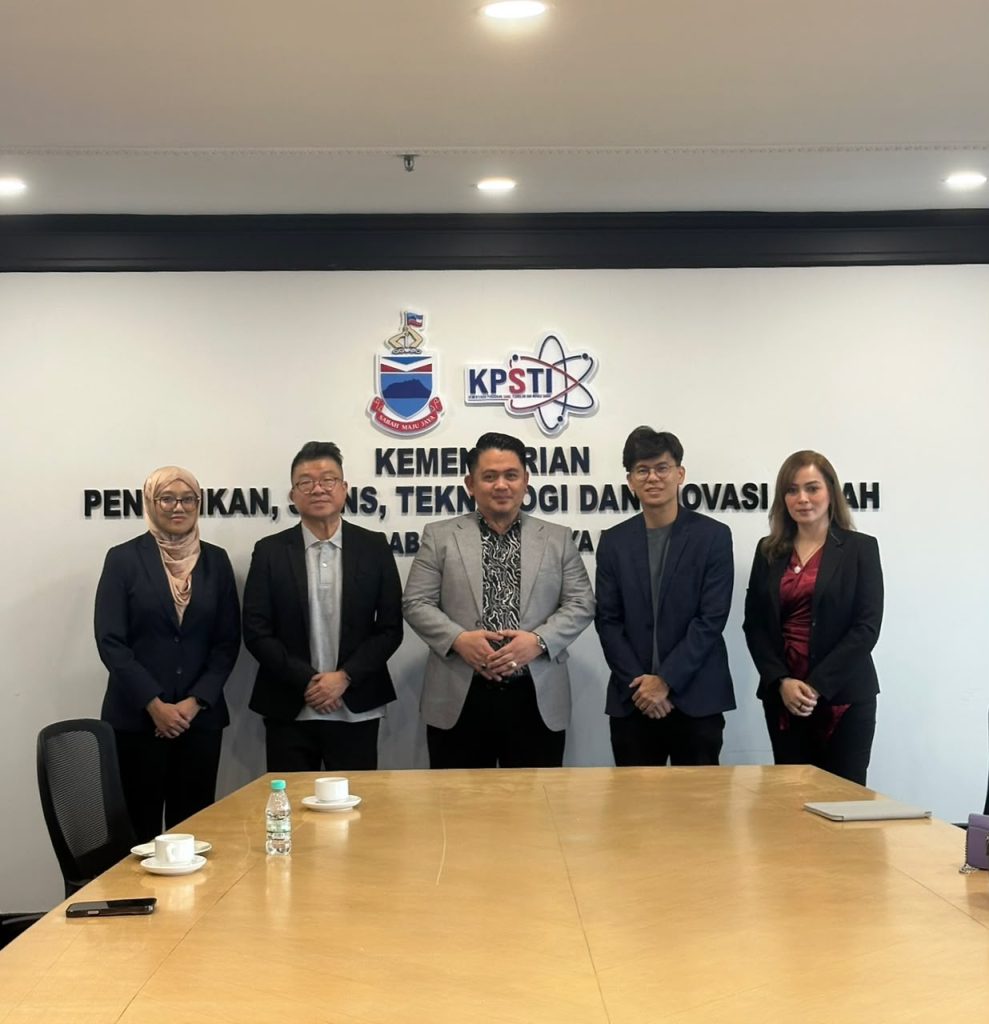
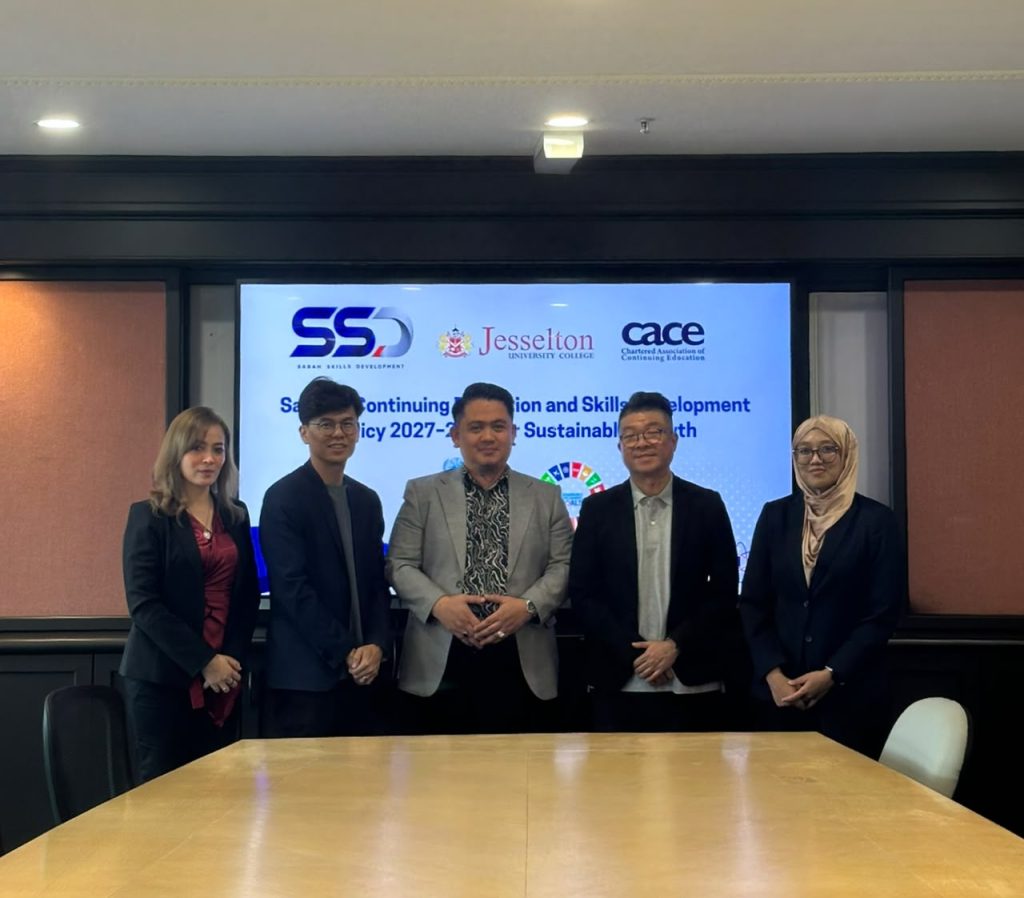
Jesselton University College (JUC) participated in an international collaboration with the Chartered Association of Continuing Education (CACE), a not-for-profit organization, headquartered in Canada with a regional office in Hong Kong, and Sabah Skills Development Sdn. Bhd. (SSD), a government-linked company under the Ministry of Education, Science, Technology and Innovation, Sabah. The collaboration focused on gathering and exchanging data concerning Recognition of Prior Learning (RPL), educational accessibility, professional competency recognition and workforce development in support of the United Nations Sustainable Development Goals (SDGs).
Conducted in 2025, the initiative brought together international and regional perspectives to examine barriers affecting working adults and experienced professionals seeking recognised qualifications. JUC contributed information on higher education accessibility and alternative learning pathways, CACE provided international perspectives on professional certification and competency recognition, while SSD contributed information on vocational training and workforce development. The collaboration aimed to identify educational inequalities and support inclusive education strategies for the proposed implementation period of 2027–2030.
Recognition of Prior Learning (RPL) acknowledges knowledge, skills and competencies acquired through education, training and professional experience. However, conventional academic entry requirements, financial constraints and qualification recognition procedures may prevent experienced individuals from accessing further education. The collaboration examined five areas: alternative educational entry pathways, professional qualification recognition, workforce competency requirements, barriers to RPL participation and educational progression opportunities.
As the higher education partner, JUC contributed institutional information concerning educational accessibility and Malaysia’s Accreditation of Prior Experiential Learning (APEL) framework. CACE provided international input on professional certification, continuing education and competency recognition, while SSD, represented by its Chief Executive Officer, Ts. Hazrullizam Idris, contributed perspectives on vocational training, workforce competencies and skills development requirements. Together, these contributions supported the examination of how academic, professional and vocational recognition pathways could improve educational opportunities for working adults and disadvantaged learners.
To strengthen the measurement component of the collaboration, JUC, CACE and SSD established five key areas for assessing working adult education accessibility: alternative educational entry pathways, professional qualification recognition, workforce competency requirements, barriers to RPL participation and educational progression opportunities. These areas provided a framework for examining the accessibility of academic and professional qualifications among working adults and experienced professionals.
Through international SDG-related data gathering and information exchange, JUC, CACE and SSD examined educational accessibility from three perspectives: higher education participation, professional competency recognition and vocational skills development. The collaboration supported the identification of barriers affecting individuals seeking recognised qualifications and contributed to SDG 4 (Quality Education),, alongside SDG 8 (Decent Work and Economic Growth), SDG 10 (Reduced Inequalities) and SDG 17 (Partnerships for the Goals).
The information gathered during the 2025 collaboration informed discussions concerning a proposed 2027–2030 Inclusive Education and Skills Development Strategic Framework. The participating organisations considered approaches to strengthening RPL accessibility, improving professional competency recognition, reducing barriers to academic qualifications and expanding lifelong learning opportunities. These discussions connected international information gathering with future strategies for educational inclusion and workforce development.
Through this collaboration, Jesselton University College demonstrated its participation in international SDG-related information gathering with partners from Malaysia and Canada. By connecting higher education, professional certification and vocational development perspectives, JUC reinforced its commitment to educational accessibility, lifelong learning and international cooperation. The University aims to continue working with CACE and SSD to support inclusive education strategies and expand opportunities for academic and professional advancement.